Tendon injuries
Tendon injuries – The ‘how’, ‘what’ and ‘why’.
Most horse owners have experienced the horror and then frustration of having a horse with a tendon or ligament injury at some point. Most of us have been lucky and have rehabbed our equine friends back to full health, but loss of use, retirement or euthanasia are sometimes the only outcome.
Treating Equine Lymphangitis
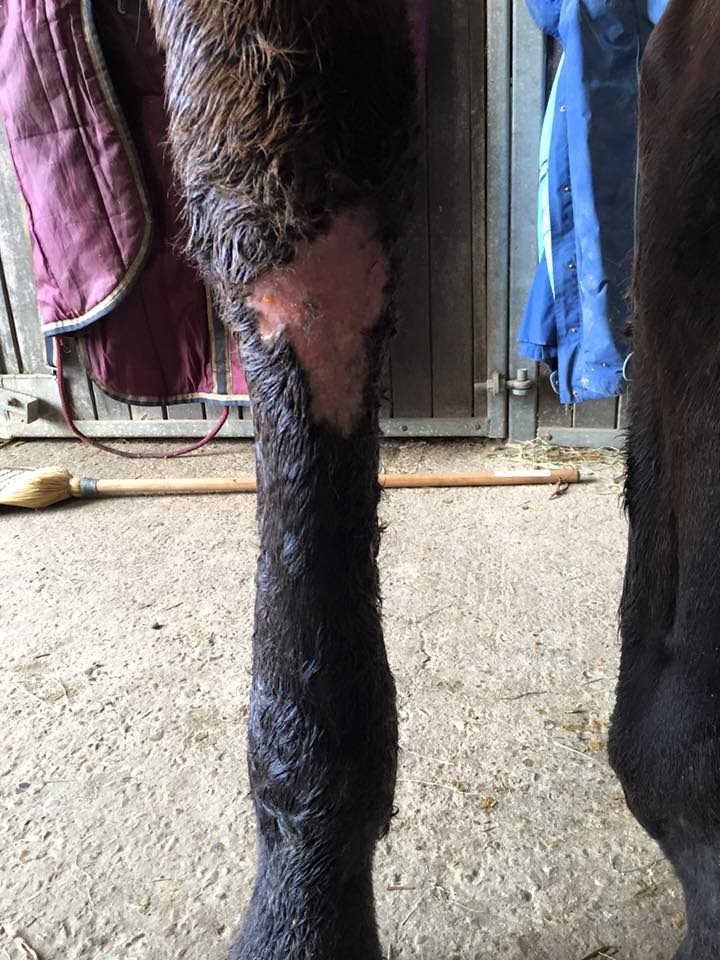
Lymphangitis, a swelling of the lymphatic vessels, generally in the hind limbs, has little scientific research surrounding it and therefore can be difficult to pinpoint and treat. Also, due to the delicate structures of the horse’s distal limbs, a fat leg is a common thing to most equestrians, with there being several different causes; infection, trauma or foot issues being some of the many causes.
Lymphangitis has a tendency, as with most causes of chronic swelling in the distal limb, to reoccur, which makes it a tricky condition to treat.
The lymphatic system is designed to gather liquid from the body through a series of tubes that act like capillaries and return it to the cardiovascular system. Conversely the vessels also act as drains, mopping up water and macromolecules from the blood system. (Sellnow. L, 2000)
When the flow of lymph through the skin is blocked, for whatever reason, the system ‘backs up’ and the interstitial space becomes flooded causing swelling and pain response.
"Lymphangitis is a condition that results in swelling of the leg and is thought to be due to a restriction in lymphatic flow, possibly due to a bacterial infection," Rose and Hodgson write in their Manual of Equine Practice. They go on to say that, "Corynebacterium pseudotuberculosis has been cultured from affected horses, but in many cases bacterial culture will be negative. Lymphangitis sometimes occurs in outbreak form, and we have seen up to 20 horses affected in a mounted police stable. The mode of transmission and the etiologic agent could not be established." (Rose & Hodgson, 1999)
Within the research, it was found near impossible procure adequate samples for bacteriology, making it difficult to find the causative agent.
As with all cases of swelling, cryotherapy and compression help in management of the condition. When the condition progresses to ulcerative lymphangitis, where the lesions happen in the affected area, which often ooze and leak lymph. This is believed to be caused by bacteria entering the skin, so good stable management is very important.
Expediency is also crucial. The vet will usually prescribe anti-inflammatories, steroids and antibiotics. Gentle exercise is also important to increase drainage within the limb. This will often be very painful for the patient, but is necessary.
Laser therapy
Laser or red light therapy has long been used on humans to treat pain and swelling. It is effective to treat equine lymphangitis for many reasons, it can modify the viscosity of the lymph making it easier to ‘flow’, it also reduces the oedema, meaning less pain for the patient and enabling more movement in the effected limb. The blue light therapy is an effect antibacterial modularity, proving to be very useful specifically in the ulcerative lymphangitis, due to the large amounts of open wounds on the effected limb.
Case study 1
‘Ocean’s Fury’ a 12 year old TB gelding. Has been semi-retired through arthritis of the facet joints of the back. Has history of skin conditions. No lesions found on leg.
Owner found patient with a very filled and swollen leg out of the box in the morning. 5/5 lame on effected limb. Vet attended patient and diagnosed ulcerated lymphangitis. Antibiotics and pain relief were prescribed. Owner advised to walk patient for 5 minutes twice a day.
I attended patient the day after the veterinary diagnosis. Owner had cleaned and massaged limb, removing any dead skin and excess hair. Red light therapy was applied over the entire limb, then specific attention given around the periphery of the ulcerated wounds. Treatment time was 15 minutes in total.
Blue light therapy was also applied over the ulcers to inhibit bacterial proliferation.
The patient then received 15 minutes of red light therapy and 5 minutes of blue light every day for 5 days, alongside his veterinary treatment.
Treatment outcome
After 5 sessions of red light therapy, the hair and infected skin started to slough away, revealing healthy pink skin underneath. After veterinary inspection, it was declared the horse was healing exceptionally well. The lymph was draining through the skin and the oedema had lessened. The horse was visibly less lame.
10 days post diagnosis, horse is now being turned out on hard standing daily and is 2/5 lame, with minimal swelling in the affected limb. The skin has healed beautifully and the vet and owner are delighted with the outcome.
Addendum
The limb, although ‘clean’ with good hair regrowth, suffered a set-back with the oedema returning. I revisited and increased the length of treatment. Patient is now being ridden to assist in in drainage of the limb, which works well. I have also suggested compression bandages on the effected limb at night.
Conclusion
Equine lymphangitis is a pervasive and reoccurring condition, for reasons that are still to be fully researched. However, this small study, and other peer-reviewed papers confirm the use of red light therapy to assist in the healing of all skin conditions.
I have experienced excellent result using this modality for this condition. The treated skin regenerated far faster than untreated skin I’ve witnessed previously and the vet was impressed with how quickly the infected skin sloughed away and healthy skin showed underneath. Upon treatment conclusion, there was new hair growth coming through the worst affected areas.
What is topline?
What is topline and why is it important?
As horsey people, we are always using the word ‘topline’, it’s a term banded about with monotonous regularity. But what does it really mean and why do horses need it? And most importantly, how do we achieve it?
Horses, like people, come in all shapes and sizes. We’re all familiar with the lean TB type with an ewe neck, and the chunky cob with a crest like a stallion, however all horses need to BUILD topline, they don’t achieve it by standing in the field.
Recent breeding techniques have gone some way to creating a horse who is designed to have a natural topline, but this needs to be maintained by correct training.
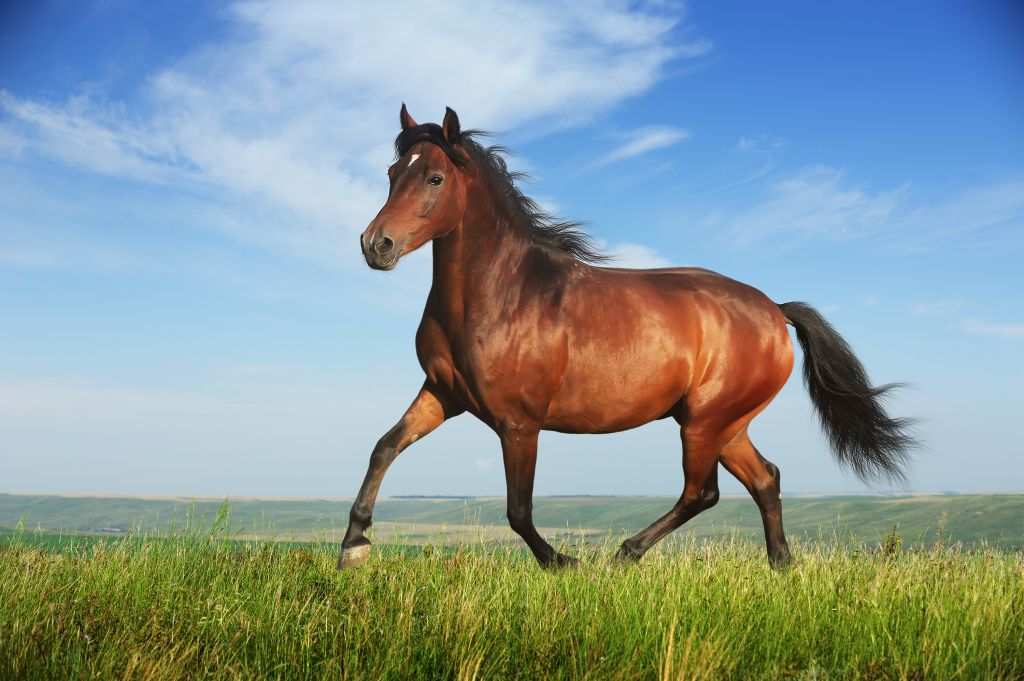
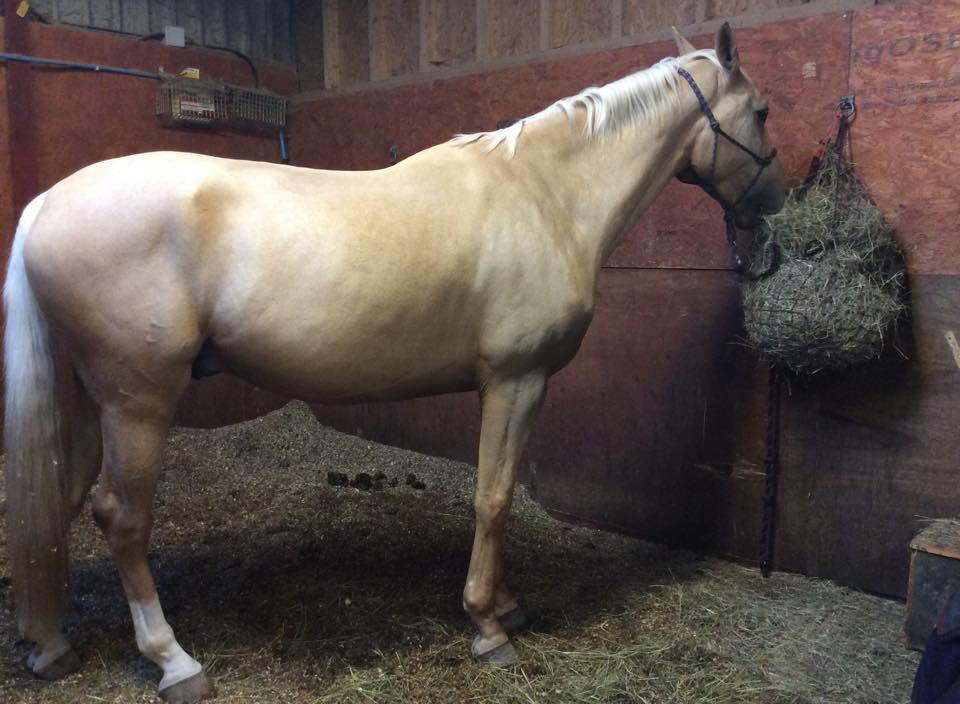
So what is topline exactly? It is the musculature that runs from the poll, down the neck, over the back and into the hind quarters. It’s a common misconception that an over-developed neck is ‘topline’, however the muscles over the back and rump are the most important muscles in this system.
These muscles should all work in harmony together, as when some are overused you end up with a horse with overdevelopment in some areas and atrophy (muscle wastage) in others.
There are many phrases to describe the amazing physiological phenomenon of the horse engaging his hind quarters. ‘On the bit’, ‘engagement’, ‘working from behind’, being ‘through’ or ‘round’, however as a physio I like to use the term ‘postural ring’ as this really describes the job the muscles and ligaments have in creating that feeling of togetherness, that as riders, we’re all searching for.
The postural ring, in basic terms, is the circle of movement from the horse’s hind quarters with energy travelling up and over its back and being contained by the abdominal muscles. As riders we understand the importance of a strong and flexible core, but it is JUST as important in our horses. A horse cannot obtain true engagement without a good set of abs!
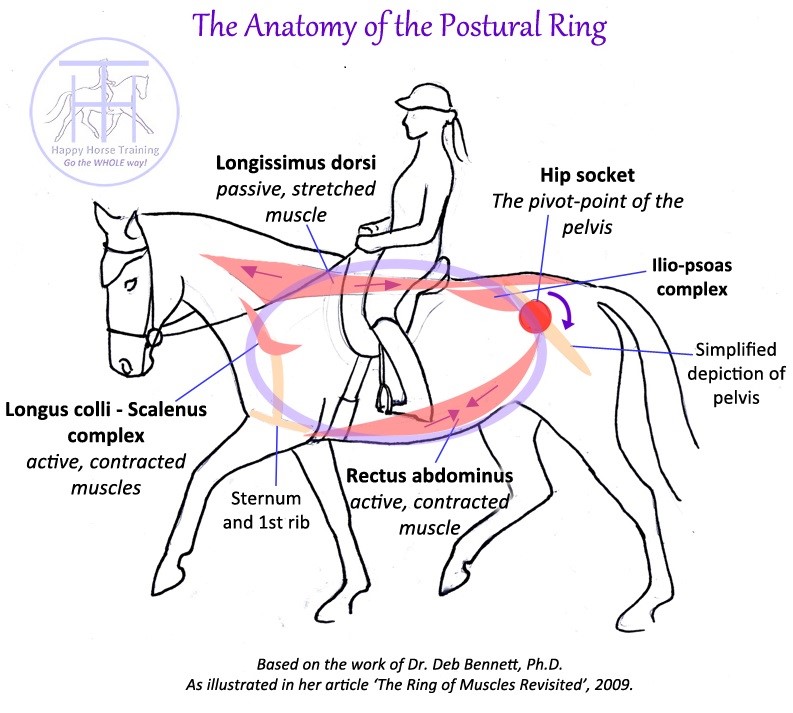
You may ask how your horse’s abs are related to his topline. To build topline your horse needs to engage the 'ring'. This is a synchronised action of the group of muscles that raise your horse’s back and stretch the spine, lifting of the abdominal muscles, tucking the pelvis and bringing the hindlegs further underneath, and ends with the arching of the top of the neck with a soft underside.
This image demonstrates how topline comes from the hindquarters and needs to be developed forwards. You will not create softness or correct muscling by putting your horse in draw reins or any other device that pulls his head down.
Once you understand the biomechanics of the horse and why you need to create topline, you then need to set about achieving it. I have set out below some exercises, ridden and ground work, which can be used in addition to your current training schedule.
If you are in the early stages of training, or your horse is young and inexperienced, you need to have one goal; to strength that back! Once the back is strong and the quarters are engaged, you can start to lift the head and work in a more upright frame.
People often ask for this too soon in young horses, and I see weekly the problems this causes, it starts with a sore back and can end with arthritis of the sacroiliac joint, issues in the hocks, splints and all sorts of other soft tissue wear and tear.
Exercise 1. Long and low
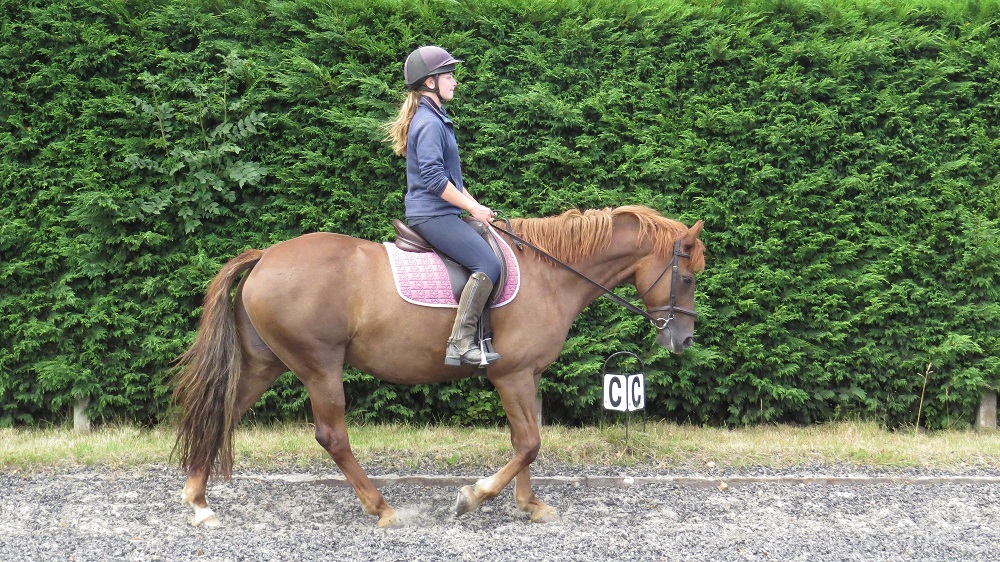
This rider shows a loose frame at the beginning of a schooling session. The horse is engaged (look at the position of her hind limb), but her neck is long and her face is vertical rather than being behind the bit. She could ask for an evener longer frame to stretch out the long muscles of the back.
This exercise should be used in every schooling session. However be careful not to ask for any movements that involve too much balancing as young horses will find that very hard. You can do big loops and circles and lots of reins changes and changes of gait. The key to this exercise is to again think BACK TO FRONT. You need to get the horse moving forwards and in front of your leg to enable him to swing through his back and limbs. If you bumble around with the horse’s head on the floor, you’re likely to fall on to the forehand.
2. Pole work
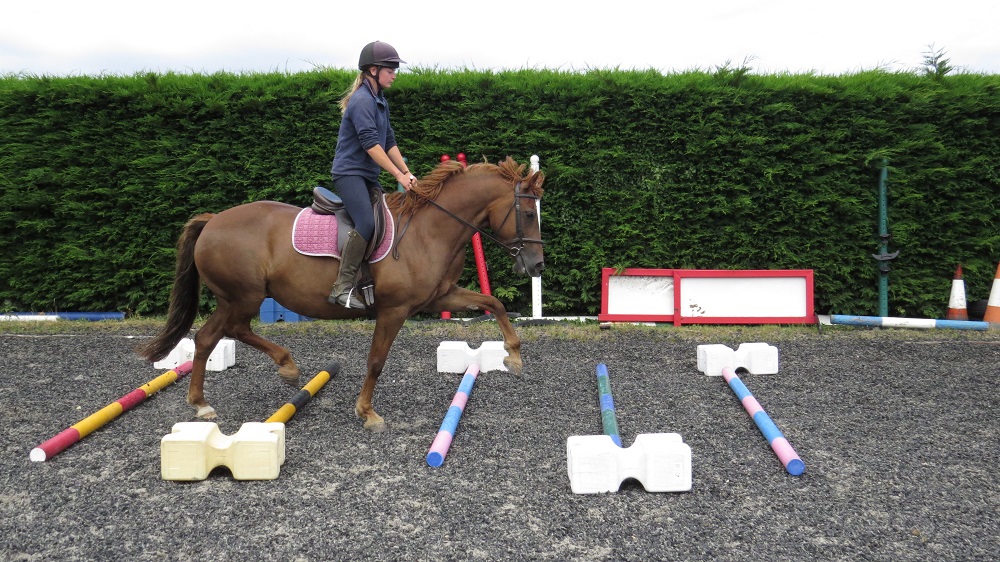
Pole work is such a useful and underused exercise. It’s so versatile and can be used by horses of all ages, abilities and disciplines. The horse pictured is a dressage and side saddle horse, but as you can see, she is engaging her quarters and abs beautifully through this line of raised poles. It also encourages horses to reach forward and down into the contact as they look at the poles on the floor.
3. Rib lifts
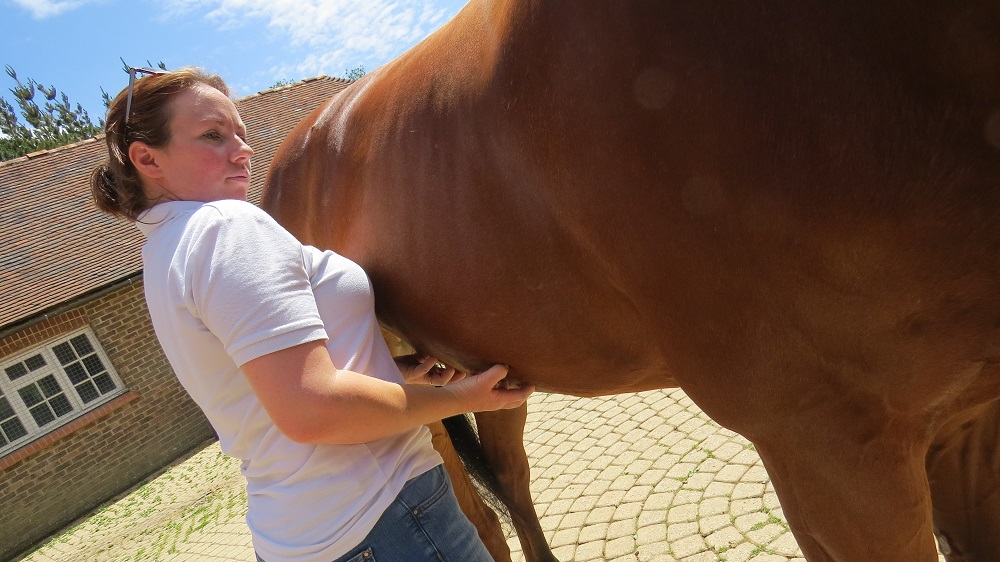
There are plenty of exercises you can do on the ground to engage your horse’s abdominals and therefore build his topline. The rib lift is possibly the easiest of these. Cup boths hands with fingers up and start where the girth is on the side of the horse. Run your hands up towards his flank, using your fingertips to really dig into the muscles of his side. If you watch his back you should see him lifting up through the loins, if you don’t, you’re not doing it hard enough! Once he’s using these muscles, hold the stretch for a few seconds and release. Do this 5 times each side every day and I promise you’ll see a difference.
TOP TIPS
- Don’t worry about your horse’s head. If you get the engine going correctly behind, the head will follow
- Don’t forget your ground work. In addition to the rib lift, there are many other dynamic and passive stretches to engage the core muscles
- Don’t forget yourself. A true soft back can only be achieved if the rider is light in his seat and this comes from our core. Get to a physio to ensure you’re straight and then start those sit ups!
- Feed your horse from the ground. Horses are not design to eat from a haynet or a manger. It puts so much strain on their back to eat at eye level, not to mention the upper-airway issues it causes
Building a good topline can take months if not years, and unfortunately us eventers like a thoroughbred type who generally lose their topline in a blink of an eye. It’s all about good foundations and correct muscling and if done correctly it will go a long way in protecting your horse from injury and strain.
Suzannah Povey-White